
“Late Shift,” written and directed by Petra Biondina Volpe, is a Swiss and German production that centers around an ongoing shortage of healthcare professionals. The film has a singular message and dramatizes it exceptionally well with a story that tracks a single shift in an understaffed hospital from beginning to end.
The nurse that we follow throughout this hectic shift is Floria, played wonderfully by Leonie Benesch. Floria is hardworking, dedicated, skilled, and genuinely cares about her patients. But she isn’t perfect nor superhuman and can’t do the work of several people, which is what she’s been tasked with somehow managing. She makes mistakes, loses her temper, and lacks the time to properly care for everyone on her rotation, but she does her best, even if it might not look like it to certain patients.
This is a tough role. Floria is in nearly every frame of the film, and Benesch was tasked with accurately carrying out all manner of complex medical tasks while making them look second nature to her, as if she does them every day. Benesch really rose to the challenge and makes everything look natural. You believe that she truly does have tremendous amounts of skill and experience in the nursing profession. The emotional side of the role is played with subtlety. “Late Shift” does build to bigger emotional crescendos, which are well-performed, but Benesch plays much of the film with great restraint, painting Floria as stressed, tired, and stretched-thin but maintaining her professional composure and holding herself together until she simply can’t any longer.
The script feels just as natural as the lead performance. There’s an easy familiarity between Floria, the patients, and the other hospital staff. This helps the story feel like a glimpse at a random hectic day in this profession rather than some big orchestrated story, which further adds to the strong sense of realism.
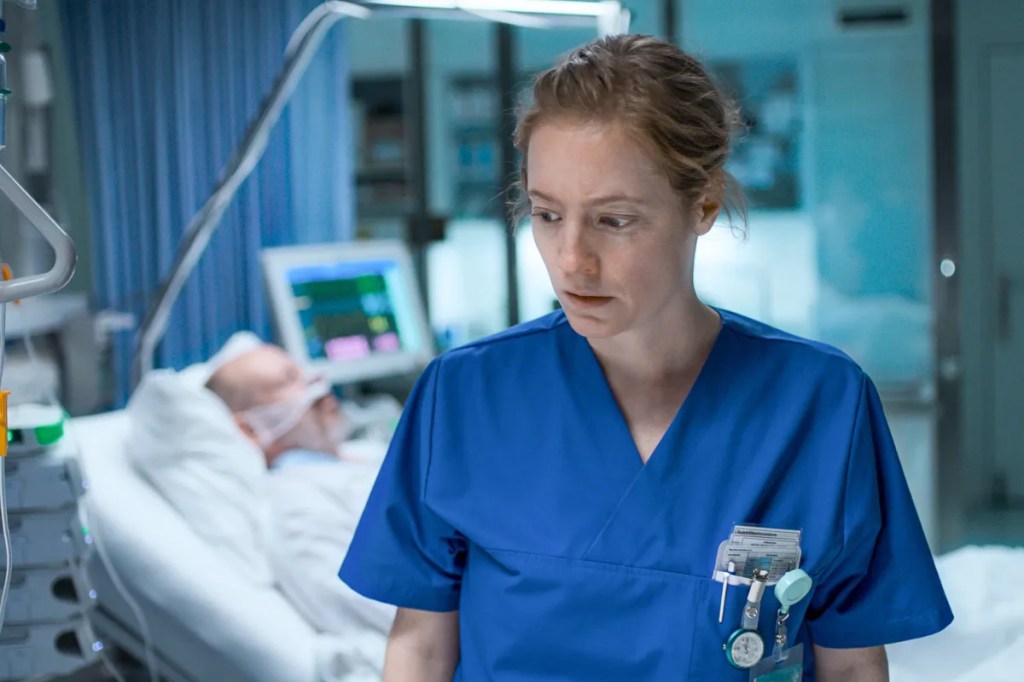
If I had to describe “Late Shift” in a single word, it would probably be “stressful.” From the moment Floria’s shift begins, tension and anxiety are constantly building. Though the film is primarily a drama, I think it’s fair to consider it a thriller as well—not in plot, but in tone, pace, and tension. The script does a great job of introducing numerous patients that recur throughout as Floria bounces back and forth and up and down throughout the understaffed hospital. These patients all have their own little stories going on, they all feel like fleshed out characters, and they are all distinct and memorable. They also serve different purposes in the plot: Some make Floria’s job even harder than it needs to be with complaints and ridiculous demands, while others make her job worthwhile through tender moments of shared humanity. But whether rude or kind, every patient adds to the stress of the shift as Floria can’t possible attend to all of them with the full attention they deserve and that she wants to give.
All of this stressful back and forth is captured with striking cinematography that makes excellent use of extremely long steadicam shots that swirl and flow through the hospital rooms and corridors right alongside Floria. The average shot length in “Late Shift” is several times longer than your average film, and I’m glad it didn’t go full bore and commit to a one-take or pseudo-one-take approach. The film strikes the perfect balance of still utilizing crisp editing while also embracing these long, complex shots that pull you in, add to the sense of realism, and compound the tension by making you really feel the passage of time—time that Floria doesn’t have. There is a truly impressive level or coordination going on to make this cinematography style work as well as it does without feeling a) sloppy, or b) mechanical and rehearsed. The perfect timing of certain shots involving several actors, complex blocking and staging, and even travel across large portions of the hospital with key moments and character interactions happening at different points along the way left me in awe.
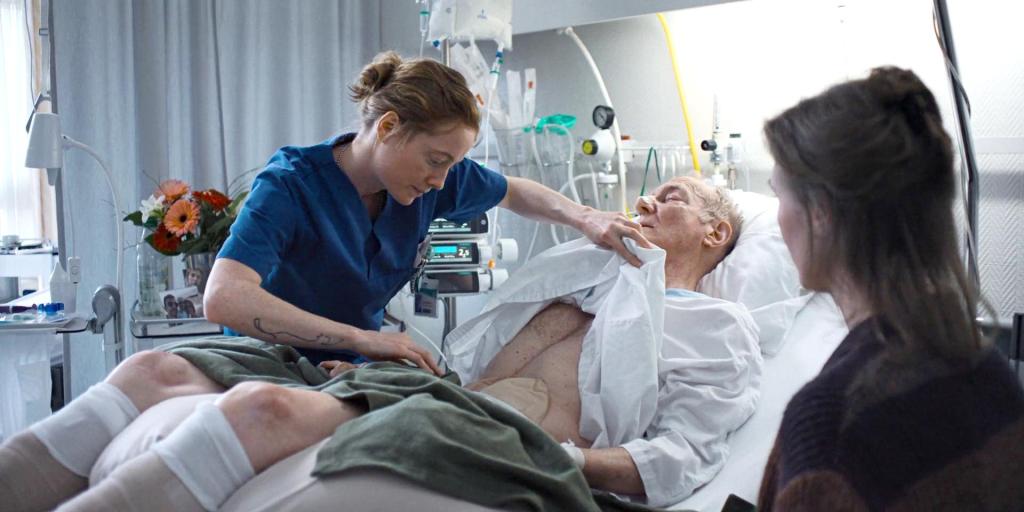
The character development for the supporting roles varies in quantity, but the quality is high across the board. Take, for instance, the one-scene character of a doctor leaving at the end of her shift. Floria begs her to stay to break a cancer diagnosis to one of her patients that has been waiting in suspense for days, but the doctor refuses—she’s done for the day and isn’t willing to make an exception. In a less nuanced film, this doctor could be a one-dimensional character who exists only for Floria to righteously get mad at. Instead, “Late Shift” adds in the detail that this doctor is exhausted after spending the entire day in surgery and working straight through her break and meal times. Now, neither character is wrong. It is still fair for Floria to be upset that this patient whom she cares about has to spend yet another night in the hospital waiting to receive devastating news, but we also understand where this exhausted and overworked doctor is coming from and can see the situation from her point of view. All it took was an extra brief exchange of dialogue to significantly deepen the conflict between them. That’s damn good drama. While Floria is the clearcut protagonist of “Late Shift,” you get the sense that a film following this equally overworked doctor or one of the other hospital staff members on the same stressful day could be just as compelling, which is a huge accomplishment.
“Late Shift” is Switzerland’s submission to the best international feature film category at the 2026 Academy Awards. There is plenty of stiff competition in that category this year (and every year), so I’m uncertain if it can snag a spot between the likes of “Sentimental Value,” “The Secret Agent,” “No Other Choice,” “It Was Just An Accident,” “Sirat,” “The Sound of Falling,” and more. I’ve always believed that the international category should be expanded beyond five nominations, just like best picture. If there were 10 spots open, I would call “Late Shift” a shoo-in for a nomination, but with only five spots, it might be more of a long shot.


Leave a Reply